Paddy Cultivation: Varieties, Sowing, Fertiliser, Irrigation and Care
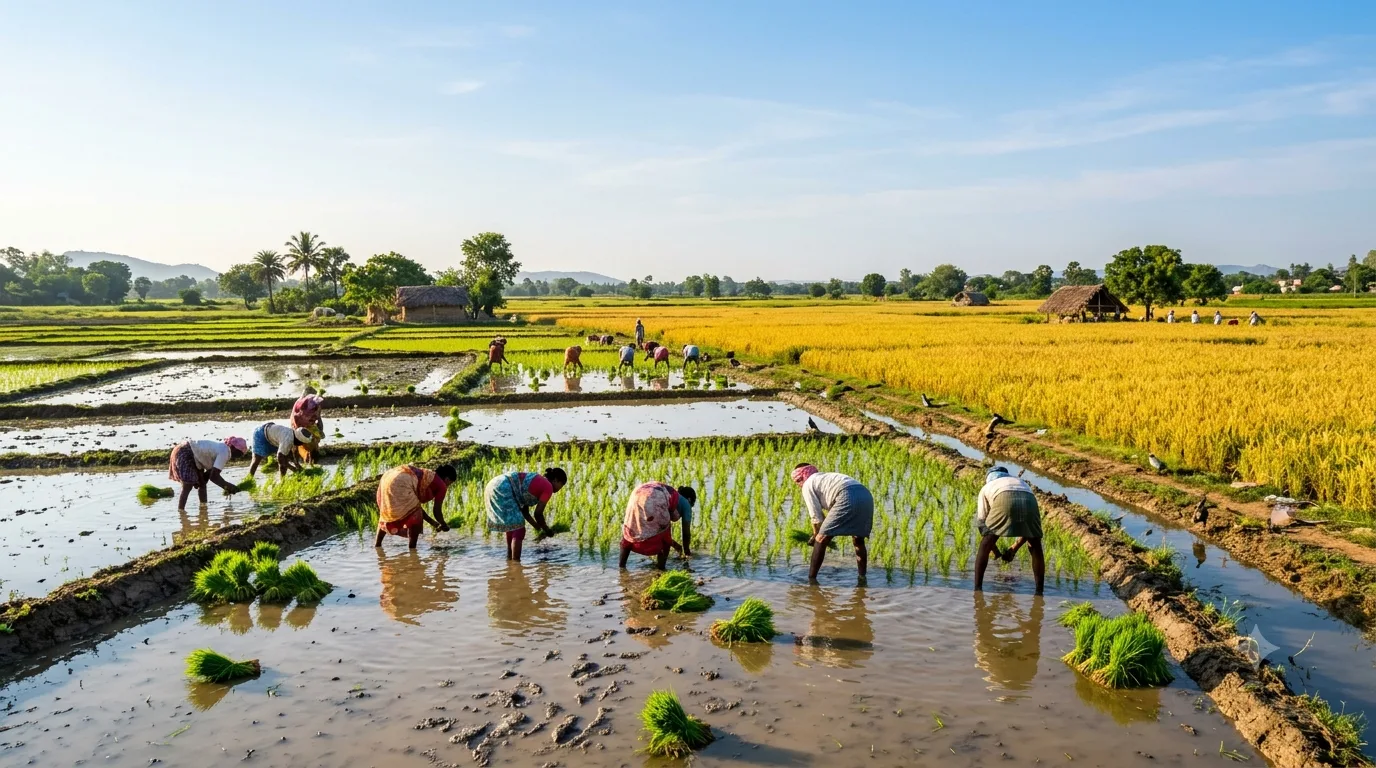
Paddy is one of India's most important kharif crops. It needs warmth and plenty of water, so it is sown around the monsoon and harvested in October-November. The common recommendations below are for transplanted paddy in an irrigated field.
Main Types of Paddy
- Basmati: Long, slender, aromatic grain. Good demand in export and the market.
- Fine paddy: For everyday table rice.
- Coarse paddy: High-yielding varieties.
- Hybrid paddy: Potential for higher yield, but fresh seed must be bought every year.
Some Popular Varieties (examples)
- Basmati: Pusa Basmati 1121, Pusa Basmati 1509, Pusa Basmati 1718.
- General varieties: MTU 7029 (Swarna), Sarjoo 52, IR 64, PR 126.
- For special conditions: Swarna Sub-1 for flood-prone areas, Sahbhagi Dhan for low water or drought, CSR varieties for saline or alkaline soil.
Varieties change over time. The names above are only examples, so ask your Krishi Vigyan Kendra (KVK) for the latest recommendation for your district before buying seed.
Nursery and Transplanting
- Nursery sowing: In north India generally from late May to mid-June. Keep the nursery area about one-tenth of the field.
- Seed quantity: For transplanted paddy, about 8-10 kg per acre for fine varieties and about 12-16 kg for coarse varieties (rough estimate). Basmati needs slightly less.
- Seed treatment: Treat seed with a fungicide before sowing on the advice of an agriculture expert or KVK.
- Transplanting time: When seedlings are about 25-30 days old, generally mid-June to mid-July.
- Spacing: About 20 × 15 cm, with 2-3 seedlings per hill. Planting too many seedlings gives no benefit.
- Direct seeding (DSR): Direct-seeded rice is also used to save water and labour. It needs about 8-10 kg seed per acre, but weed control needs more attention.
Fertiliser (common recommendation)
For general varieties, about 120 kg nitrogen, 60 kg phosphorus and 40 kg potash per hectare, i.e. about 48 : 24 : 16 kg per acre. In basmati, less nitrogen (about 24-36 kg per acre) is given, because too much nitrogen can make the crop lodge and increase disease.
- At transplanting: All the phosphorus (DAP or SSP), all the potash and one-third of the nitrogen.
- At tillering (about 25-30 days later): One-third of the nitrogen (urea).
- Before panicle formation (about 50-55 days later): The remaining one-third urea.
- Zinc: In zinc-deficient fields, zinc sulphate about 10 kg per acre. Apply only after a soil test.
- Well-rotted farmyard manure or green manure (dhaincha): Applying at field preparation improves soil health.
Irrigation
- After transplanting, keep about 2-5 cm of water in the field at first.
- Do not let water run short at tillering, panicle emergence and grain filling.
- Stop irrigation about 10-15 days before harvest.
- Instead of keeping water standing all the time, letting the field dry out now and then (alternate wetting and drying) can save water. Ask your KVK about it.
Weeds, Diseases and Pests
- Weeds: The first 30-40 days after transplanting matter most. Weed on time or use a herbicide on an agriculture expert's advice.
- Main diseases: Blast, bacterial leaf blight, sheath blight, brown spot and false smut.
- Main pests: Stem borer, leaf folder, brown planthopper (BPH) and gundhi bug.
- As soon as you see symptoms, contact your KVK or agriculture department. Do not decide the medicine and dose yourself.
Harvest and Yield
- Harvest when about 80-85% of the grains have ripened and the panicles turn straw-yellow. Too much delay causes loss from shattering and breakage.
- Dry the grain well after harvest before storing.
- With good care, improved varieties can give about 20-25 quintals per acre on average and basmati about 15-20 quintals per acre. Actual yield depends on variety, weather and care.
Conclusion
The right variety, transplanting on time, and balanced fertiliser and water can improve both yield and income from paddy. Find sellers of seed, fertiliser and farm equipment in the "Agriculture" section of gavbazar.
Disclaimer: This information is based only on experience and is for general awareness. Please consult a veterinarian or agriculture expert before making any decision about your animals or crops. gavbazar will not be liable for any loss arising from its use.