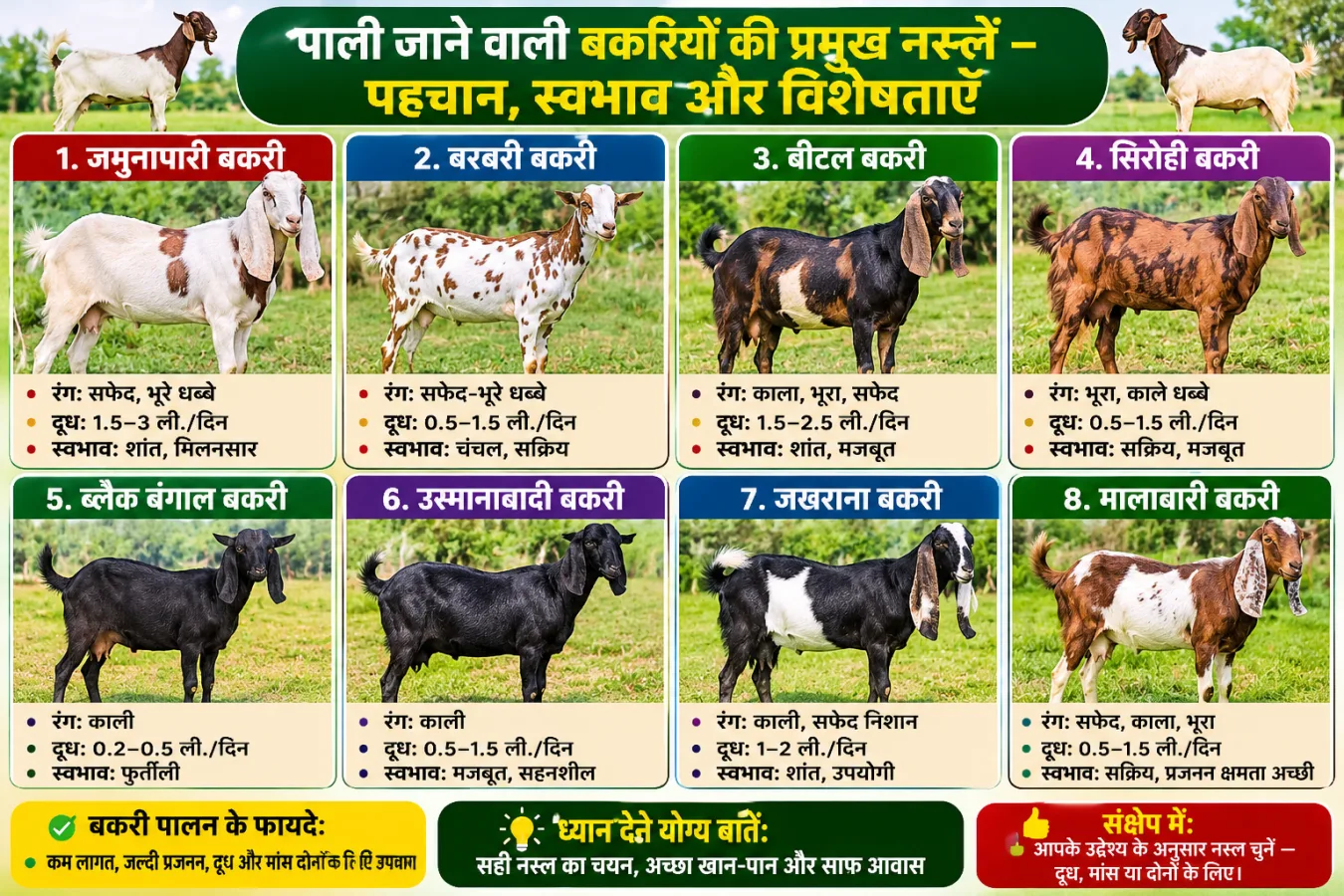
Major Goat Breeds Reared in India – Identification, Temperament, and Characteristics
- Jamunapari Goat
The Jamunapari is one of the most famous and largest goat breeds in India. Its native region is considered to be the areas around Etawah, Mathura, and the Yamuna River in Uttar Pradesh. It is reared mainly for both milk and meat. Its long legs, large ears, and prominent nose are its distinctive features.
Main Characteristics:
- Generally white in color, with brown or light-colored patches sometimes visible on the body.
- Large, long, and strong body.
- Long ears that hang downward.
- Prominent nose, commonly known as a Roman nose.
- Long and strong legs.
- Male goats generally have large horns.
Temperament and Behavior:
- Generally calm and friendly in nature.
- Some goats can be playful and slightly stubborn.
- May feel nervous initially in a new environment.
- Can butt with their heads when frightened or disturbed.
- Gradually become comfortable with children and other animals.
Milk Production: With proper care, it can produce approximately 1.5–3 liters of milk per day. Production depends on breed quality, nutrition, and health.
Advantages:
- Useful for both milk and meat production.
- Its large body size can result in good meat production.
- Locally available in some regions of Uttar Pradesh.
- Kids from good-quality breeding lines are in market demand.
Disadvantages:
- Requires more feed compared to smaller goat breeds.
- Needs more space because of its large body.
- Proper care and health management are essential.
- Clean and hygienic housing is necessary, especially in hot and humid conditions.
2. Barbari Goat
The Barbari goat is one of the popular goat breeds of Uttar Pradesh. It is mainly reared in Agra, Mathura, Etawah, and surrounding regions. It is known for its small body size, attractive coat patterns, and early reproductive maturity. It can be a useful breed for people who want to start goat farming with limited space.
Main Characteristics:
- White body with brown or black spots.
- Small but strong body.
- Short and erect ears.
- Small horns that curve backward.
- Short and strong legs.
- Different colored patches may appear on the face.
Temperament and Behavior:
- Generally active and playful.
- Can become comfortable with humans quickly.
- Can be managed easily in relatively small spaces.
- May run quickly when frightened.
- Sometimes may butt against other goats.
Milk Production: Approximately 0.5–1.5 liters per day. It is also reared mainly for meat production and breeding purposes.
Advantages:
- Easy to manage because of its small body size.
- Good reproductive capacity.
- May give birth to two or three kids at a time.
- Can be reared in limited space.
- May have good market demand for meat.
Disadvantages:
- Smaller body size compared to larger breeds such as Jamunapari.
- Milk production may be limited.
- Kids need protection from cold weather and infections.
- Proper cleanliness and management are essential when keeping large numbers of goats.
3. Beetal Goat
The Beetal goat is a famous breed of Punjab. It is known for its large body, long ears, and good milk-producing capacity. It is reared for both milk and meat production.
Main Characteristics:
- Can be black, brown, or spotted with white.
- Large and strong body.
- Long ears that hang downward.
- Slightly prominent nose.
- Long and strong legs.
- Well-developed udder.
Temperament and Behavior:
- Generally calm and domesticated in nature.
- Some goats can be playful and stubborn.
- May become alert when they see unfamiliar people.
- Can butt with their heads when disturbed.
- Prefers regular care and timely feeding.
Milk Production: With proper care, it can produce approximately 1.5–2.5 liters of milk per day.
Advantages:
- Useful for both milk and meat production.
- Good milk-producing capacity.
- Its large body size can result in good meat production.
- Suitable for commercial goat farming.
- Kids from good-quality breeding lines are in demand.
Disadvantages:
- Requires more feed.
- Needs more space compared to smaller goat breeds.
- Regular health checkups are necessary.
- Proper shade and water facilities are important during hot weather.
4. Sirohi Goat
The Sirohi goat is a famous breed of Rajasthan. It is named after the Sirohi district of Rajasthan. It is known for its strong body and ability to adapt to hot and dry environments. It is mainly reared for meat production.
Main Characteristics:
- Generally brown in color, with black or white spots sometimes visible.
- Medium-to-large and strong body.
- Medium-sized, hanging ears.
- Small horns that curve backward.
- Strong legs.
- Short and relatively dense hair.
Temperament and Behavior:
- Generally active and strong in nature.
- Prefers roaming in open environments.
- Some goats can be stubborn.
- May run away or butt with their heads when frightened.
- Prefers living in a herd.
Milk Production: Approximately 0.5–1.5 liters per day. Its primary use is meat production.
Advantages:
- Can adapt well to hot and dry environments.
- Has a strong body.
- Useful for meat production.
- Can be relatively easy to manage under suitable conditions.
- A useful breed for commercial goat farming.
Disadvantages:
- Milk production is limited.
- Protection from moisture and unhygienic conditions is necessary during the rainy season.
- Regular vaccination and deworming are essential.
- Balanced nutrition is required for good body weight gain.
5. Black Bengal Goat
The Black Bengal goat is a famous breed of West Bengal and eastern India. It is known for its small body size, high-quality meat, and skin. It is also considered to have good reproductive capacity. It is mainly reared for meat production.
Main Characteristics:
- Mainly black in color, although brown, white, and mixed colors can also be found.
- Small and compact body.
- Short ears.
- Short and strong legs.
- Short and shiny hair.
- Both male and female goats may have horns.
Temperament and Behavior:
- Generally active and agile.
- Prefers living in a herd.
- Often moves around in search of food.
- Can run quickly when frightened.
- Some goats may butt against other goats.
Milk Production: Generally around 0.2–0.5 liters per day. It is mainly known for meat production.
Advantages:
- Good-quality meat.
- Good reproductive capacity.
- May give birth to two or three kids at a time.
- Easy to manage because of its small body size.
- May have good demand in local markets.
Disadvantages:
- Small body size.
- Very low milk production.
- Kids require special care.
- The risk of infections may increase in damp and unhygienic conditions.
6. Osmanabadi Goat
The Osmanabadi goat is a famous breed of Maharashtra. It is named after the Osmanabad region of Maharashtra. It is known for its strong body and ability to adapt to different climatic conditions. It is mainly reared for meat production.
Main Characteristics:
- Mainly black in color.
- Medium-to-large and strong body.
- Medium-sized, hanging ears.
- Medium-sized horns.
- Strong legs.
- Short and shiny hair.
Temperament and Behavior:
- Generally active and strong in nature.
- Prefers roaming in open environments.
- Some goats can be playful and stubborn.
- May butt with their heads when disturbed.
- Prefers staying with the herd.
Milk Production: Approximately 0.5–1.5 liters per day. Its primary use is meat production.
Advantages:
- Strong body and good endurance.
- Useful for meat production.
- Can adapt to hot and dry regions.
- Can be reared on different types of fodder.
- A good breed for commercial goat farming.
Disadvantages:
- Milk production may be limited.
- Balanced nutrition is necessary for good growth.
- Clean and dry housing is required during the rainy season.
- Proper health management is essential when keeping large numbers of goats.
7. Jakhrana Goat
The Jakhrana goat is a famous breed of Rajasthan, particularly associated with Jakhrana village in the Alwar district and nearby areas. It is reared mainly for both milk and meat production. It has a large and strong body, and white markings on its face can be one of its identifying features.
Main Characteristics:
- Mainly black in color.
- White markings may appear on the face and ears.
- Large and long body.
- Long ears that hang downward.
- Medium-sized horns.
- Well-developed udder.
Temperament and Behavior:
- Generally calm and domesticated in nature.
- Some goats can be playful and stubborn.
- May become alert around unfamiliar people.
- Can butt with their heads when frightened or disturbed.
- Prefers regular care.
Milk Production: With proper care, it can produce approximately 1–2 liters of milk per day.
Advantages:
- Useful for both milk and meat production.
- Large and strong body.
- Good milk-producing capacity.
- Suitable for commercial goat farming.
- Kids from good-quality breeding lines are in demand.
Disadvantages:
- Purebred animals may be difficult to find in some regions.
- Requires balanced nutrition.
- Needs sufficient space because of its large body.
- Milk production depends on breed quality and proper care.
8. Malabari Goat
The Malabari goat, also known as the Tellicherry goat, is a famous breed of Kerala. It is known for its different coat colors, reproductive capacity, and meat production. It is mainly reared in Kerala and some other regions of South India.
Main Characteristics:
- Can be white, black, brown, or mixed in color.
- Medium-sized body.
- Medium-sized ears.
- Horns may be small or medium-sized.
- Strong legs.
- Short hair on the body.
Temperament and Behavior:
- Generally active and playful.
- Prefers living in a herd.
- May feel nervous for some time in a new environment.
- Can run quickly when frightened.
- May butt with its head when disturbed.
Milk Production: Approximately 0.5–1.5 liters per day. It is mainly reared for meat production and its reproductive capacity.
Advantages:
- Good reproductive capacity.
- May give birth to two or more kids at a time.
- Useful for meat production.
- Available in different coat colors.
- Well adapted to the climatic conditions of South India.
Disadvantages:
- Milk production may be limited.
- Excessive moisture and unhygienic conditions can increase the risk of diseases.
- Clean and well-ventilated housing is essential.
- Kids require special care after birth.