How to Grow Green Fodder for Cattle: A Guide to Berseem, Napier, Sorghum and Maize
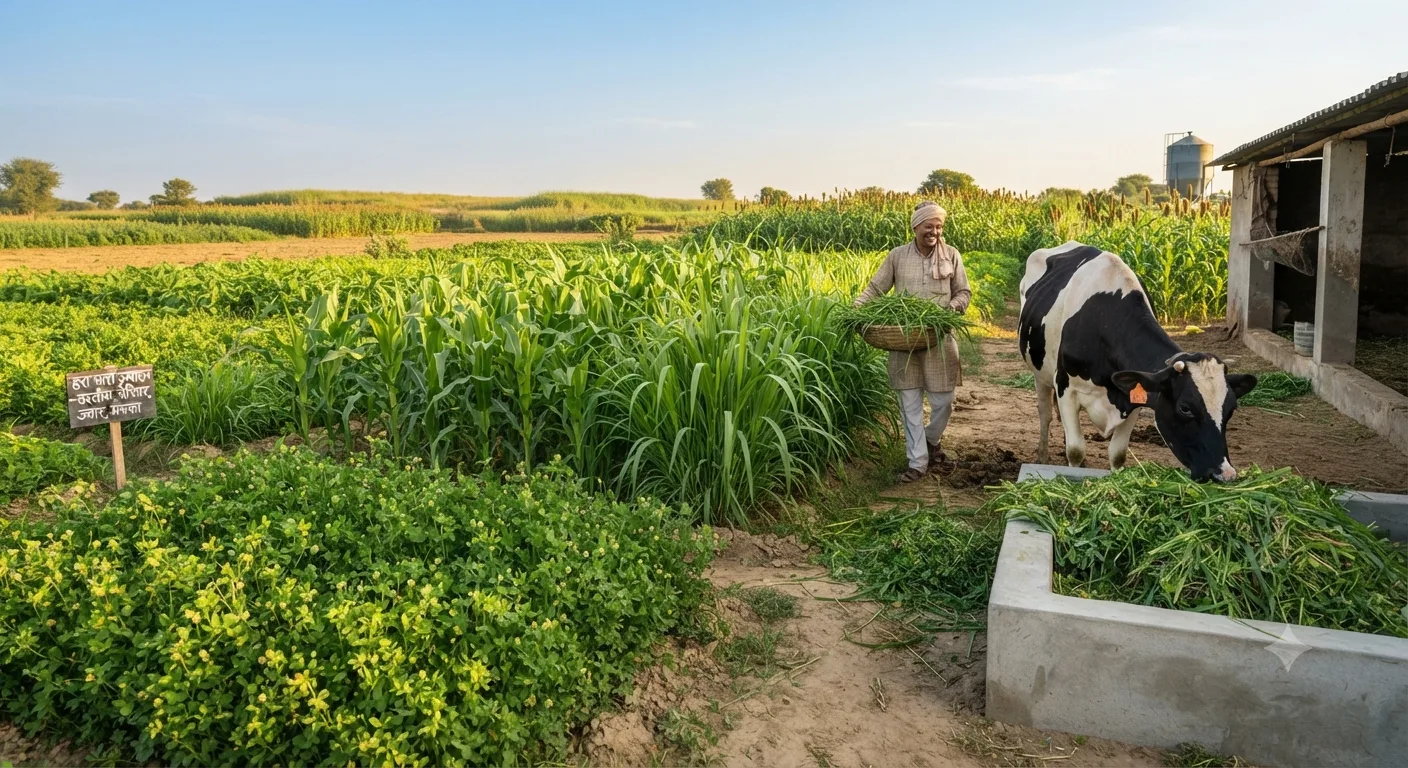
Green fodder is cheap, nutritious and boosts milk yield. By growing fodder on a small part of your land, you can cut your spending on feed considerably.
-
Berseem (the winter king of fodder) Season: Rabi, sown in October-November Benefit: Rich in protein, can be harvested several times Caution: Feeding too much wet berseem can cause bloat, so mix it with dry fodder.
-
Napier Grass (Elephant Grass) Season: Once planted it lasts several years. The best planting time is usually February-March or the monsoon. Benefit: Very high yield, fodder all year round Method: Root slips or stem cuttings are planted. Harvest when the plant is 2-3 feet tall.
-
Sorghum (Chari) Season: Kharif and summer, sown in April-July Caution: Feeding it at a very young stage (before about 45-50 days) carries a risk of poisonous compounds (HCN). Harvesting around flowering is better.
-
Maize (for fodder) Season: Both kharif and summer Benefit: Tasty, rich in energy, and also good for making silage.
-
Cowpea / Pearl Millet (Bajra) Good options for the summer season. Sowing a legume and a cereal fodder together gives balanced nutrition.
How to Get Fodder All Year Round (Plan)
- Winter (Rabi): Berseem, oats
- Summer: Sorghum, maize, cowpea
- Monsoon: Sorghum, bajra, Napier
- Whole year: Napier
Make Silage and Hay (Dry Fodder) When green fodder is plentiful, preserve it as silage or hay so it can be used in lean days.
General Precautions
- If pesticide has been sprayed on the fodder, do not feed it to animals for a few days.
- Chopping the fodder into small pieces reduces wastage.
- Do not suddenly give animals a lot of green fodder. Change their diet gradually.
Conclusion With a little planning, it is possible to have green fodder all year round, and this increases both milk production and profit. For seeds and feed-related supplies, see the "Cattle Feed Shops" list on gavbazar.